
.png)
What swearing taught me about respect and self-awareness.

What Swearing Taught Me About Respect and Self-Awareness
I just read a quote that said, “Swearing isn’t a sign of being low-class — it’s a sign of passion and intellect.”
I have to admit, I was relieved.
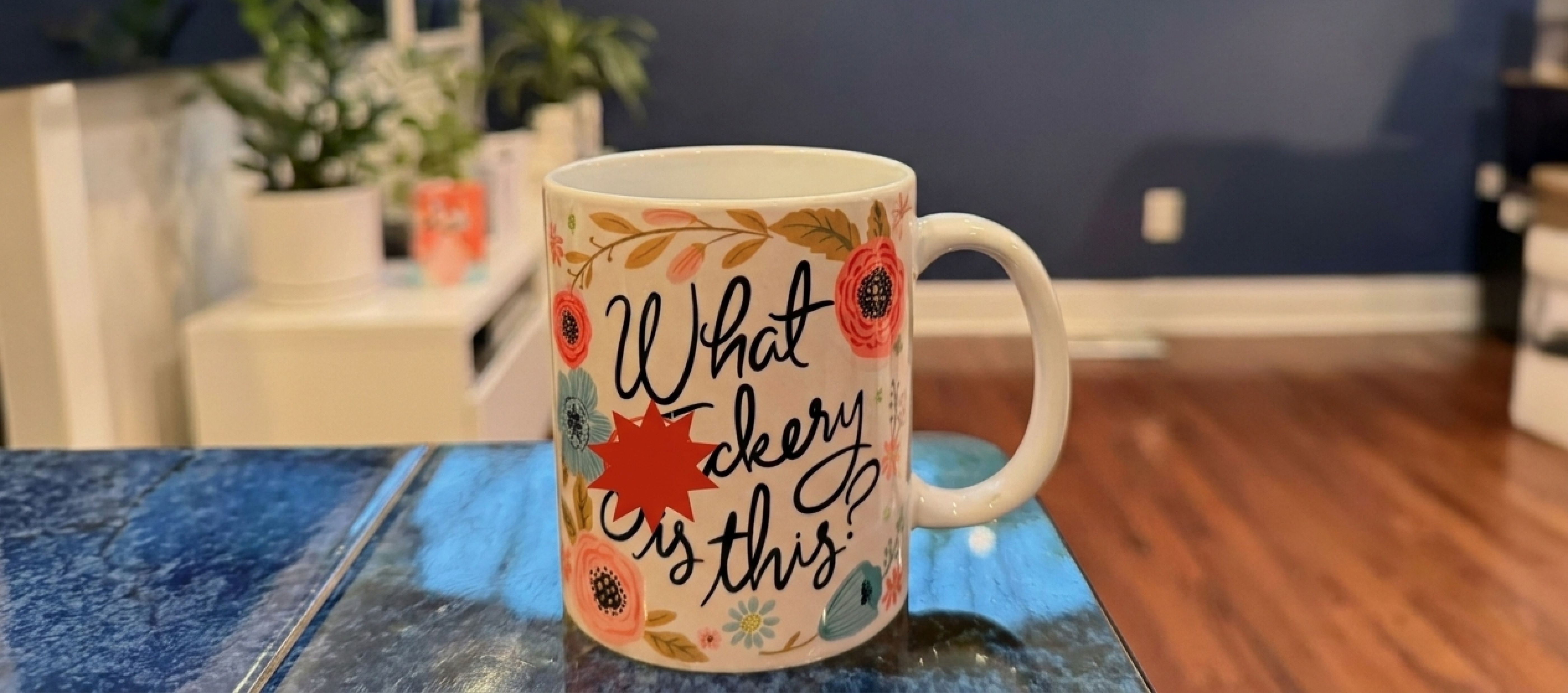
Because one of my flaws is that I swear.
Not at people — but often aboutthings. It’s my way of expressing passion, frustration, or excitement. I’ve done it in boardrooms, project meetings, and (if I’m honest) the occasional Zoom call. It’s not something I’m proud of, but it usually comes from a place of caring deeply — about people, progress, and getting things right.
The HR Call
When I was a Deputy Minister, I got a call from HR one afternoon. Someone on my team had raised a concern about my language.
To give you some context — this was during the height of COVID. I was leading two departments, managing a budget of about a billion dollars, and making decisions that affected people’s livelihoods every day. I’d been in government about two years. There were moments when I was frustrated — never at the people, always at the process — and I didn’t always hide it well.
Still, when HR called, I was mortified. In over 30 years of leadership, I’d never had a complaint filed about me.
I apologized immediately to the HR director and promised to make an effort to modify my behaviour. I also asked who had raised the concern — not to confront them, but so I could understand and make amends. Of course, that information couldn’t be shared.
The Turning Point
At first, I’ll admit — I thought it was a little funny. Someone was so offended by my swearing that they went to HR rather than coming to me. But then the realization hit: that person didn’t feel safe coming to me.
And that wasn’t funny at all.
If my language — however passionate or well-intentioned — created distance between me and my team, then I had a problem.
So, during my regular one-on-one meetings, I began asking a simple question:
“Is there anything about how I communicate that makes you uncomfortable?”
I didn’t mention the HR call. I just opened the door for honesty.
Eventually, the person who had raised the complaint and I did have a conversation. She admitted that my language made her uncomfortable. And she was right. It didn’t matter that my intent wasn’t harmful — what mattered was how it made her feel.
No one should have to sit in a meeting with their boss and feel uneasy.
I told her I would make a real effort to change, but I also asked for a bit of grace — that if I slipped, she’d feel comfortable telling me directly. We agreed. It was one of the most genuine, respectful conversations I’ve ever had in leadership.
The Lesson
That experience taught me something I’ve never forgotten:
Leadership isn’t about being right — it’s about creating safety.
She shouldn’t have had to “tough it out” just because I was passionate. My responsibility was to create space where everyone felt respected and heard.
But I also knew myself — I wasn’t going to change overnight. What I could do was acknowledge it openly, invite feedback, and keep trying.
The beauty of that conversation was that it built trust. She saw that I wasn’t defensive or dismissive; I was simply human — willing to learn, to adjust, and to be held accountable. And once that wall came down, our working relationship got stronger.
Passion vs. Professionalism
I’ve always believed that passion is one of my greatest strengths. It’s what drives me to take on big challenges, advocate for teams, and push for change even when it’s hard.
But unchecked, passion can look like impatience. It can drown out quieter voices. It can make a team step back instead of leaning in.
Swearing was never really the issue — it was a symptom. What mattered was whether my intensity helped or hindered connection.
There were moments when that same passion inspired people — when it gave permission for others to care just as deeply. But there were also moments when it made people cautious, unsure how to engage. That balance — between being authentic and being aware — is something I still work on every day.
Seeing Yourself Through Your Team’s Eyes
If there’s one takeaway from this story, it’s this:
As a leader, you have to be willing to see yourself through your team’s eyes.
Ask yourself:
We all have blind spots — things we justify as “just who we are.” But the truth is, leadership means taking responsibility for the ripple effect of our behaviour.
Owning the Flaws
I still swear sometimes. I’m self-aware enough now to notice it, to apologize when it happens, and to keep working on it.
And I’ve learned that authenticity isn’t about defending your flaws — it’s about owning them.
That conversation years ago wasn’t about language; it was about humility. It reminded me that the people who work for us don’t owe us comfort. We owe them respect.
We owe them a workplace where they feel seen, heard, and safe to be themselves — even if that means calling the boss out once in a while.
So no, swearing isn’t the measure of a low-class leader. But neither is it a badge of honour. It’s just a reminder that passion, like leadership, works best when it’s grounded in awareness.
You can be passionate and professional.
Human and accountable.
Flawed and still growing.
And honestly? That’s the kind of leader I want to keep being.
If you’re ready to lead with more confidence and clarity, let’s talk…
Source:
Feldman et al., Frankly, We Do Give a Damn: The Relationship Between Profanity and Honesty
Honest stories from thirty-five years of leadership, what I got wrong and what it taught me.

.png)
.png)
%20(1).png)